
006. Fiddleheads on Home and Native Land
Forage | verb
ˈfôrij,ˈfärij/
(of a person or animal) search widely for food or provisions.
obtain (food or provisions).
obtain food or provisions from (a place).
C
anadians of the African diaspora can be traced as far back to the 16th century. When the British crown placed Black loyalists on poor, infertile land, they foraged through horrible conditions. They fed, nourished and took care of their families despite their circumstances. Many of those recipes of nothing turned to something, remains prevalent today.
Foraging looks different across different sub-cultures, ethnicities and communities. While some forage for survival, others experience it as a delicacy that fills their plates with rare exotic mushrooms, fiddleheads and spicy arugula. Class distinctions surrounding foraging have also evolved over time. A Lobster sandwich was once considered a "poor man's meal" in the hands of early Black Loyalists, but now are a high-priced menu item.
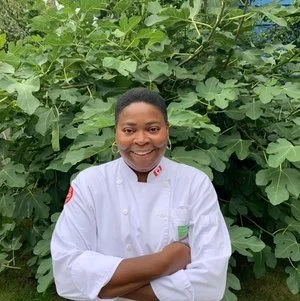
Currently, Black foragers are difficult to find in Canada. There are many groups, organizations and communities surrounding foraging activities across the country, but none dedicated to Black foragers specifically. And, according to Natasha Sawyer, a forager and chef living in British Columbia, she never sees anyone that looks like her within those outdoor communities.
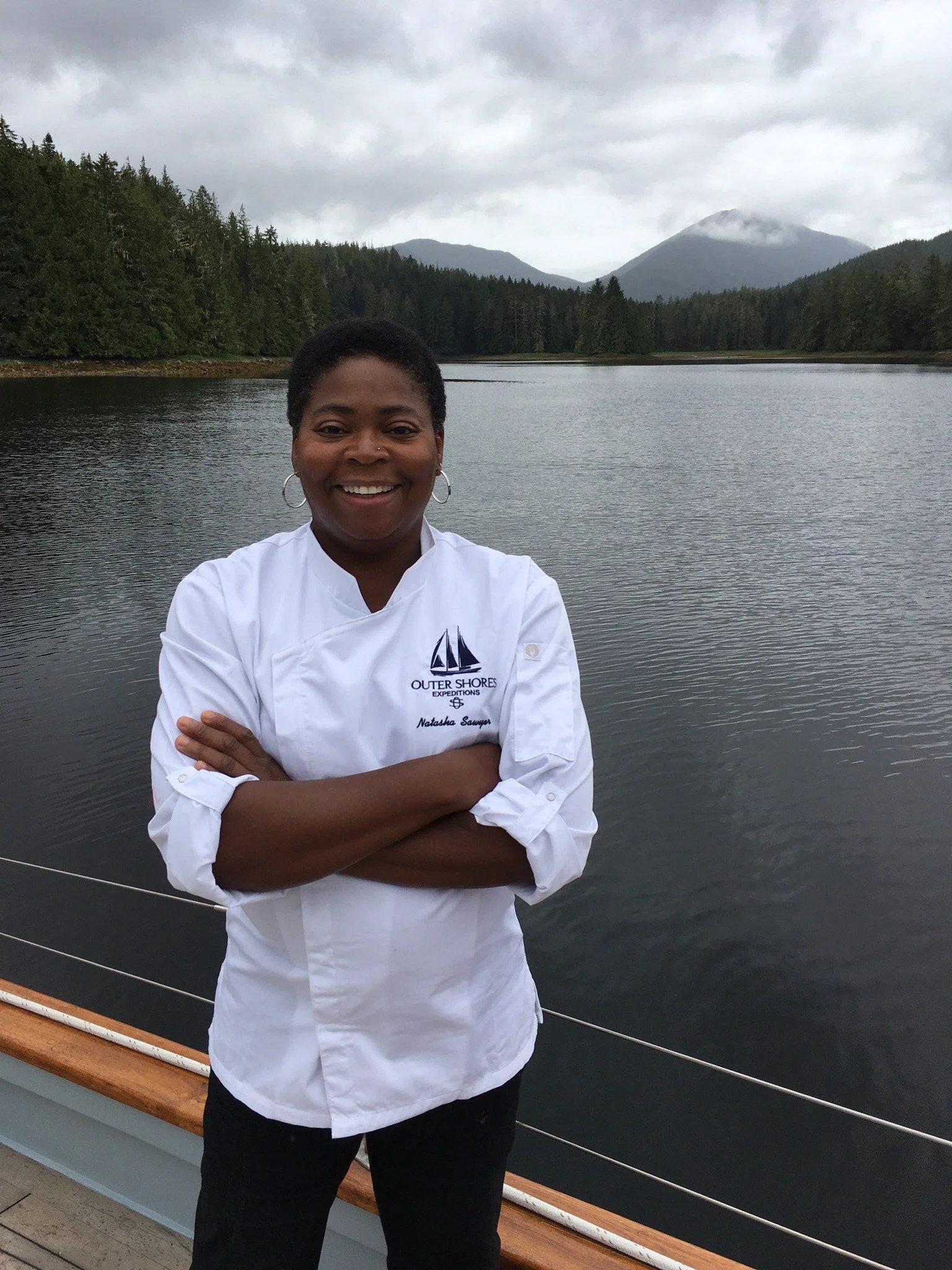
Natasha Sawyer, on board the Passing Cloud boat of Outer Shores Expeditions
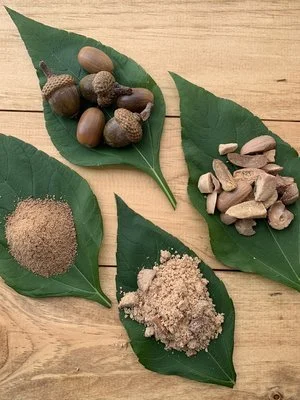
Natasha is passionate about foraging. She enjoys turning dandelion greens into remixed spanakopita and drizzling maple syrup on an acorn flour dessert. Her journey from living in the Bahamas to the Don Valley river in Toronto and touring the west coast of Canada on a boat called the Passing Cloud, has shaped her lifelong passion of foraging and cooking.
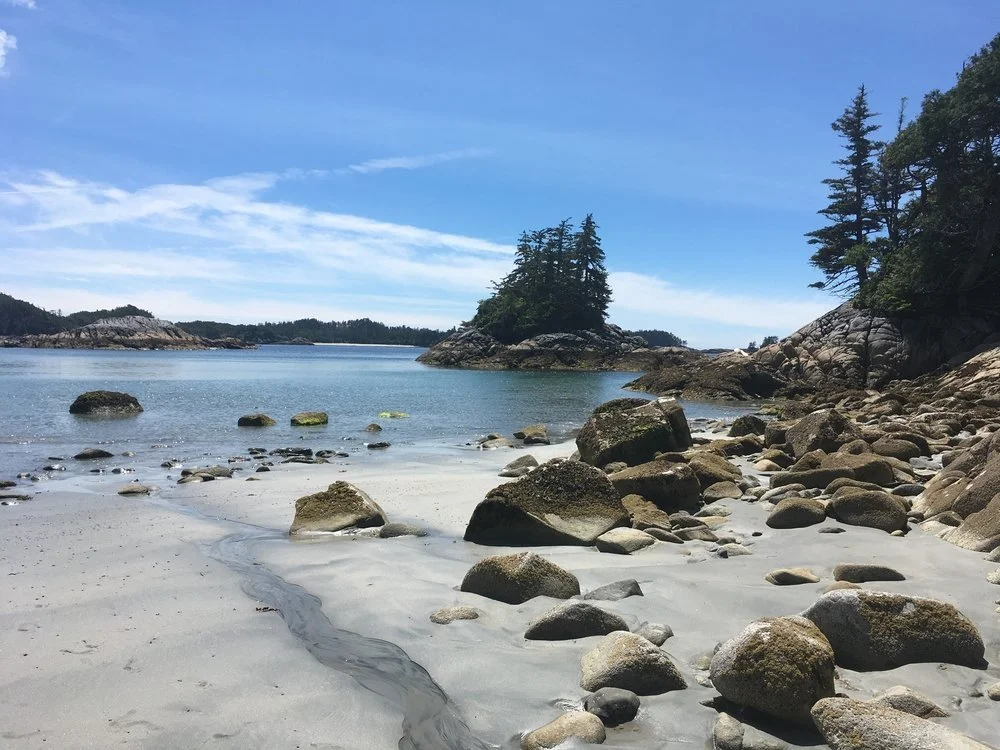
Natasha’s photo of a beach near Hakai Passage — a stop during her time on the Passing Cloud.
Often times when she stepped off the boat onto foreign terrain, she felt that she may be making history as the first Black person to explore and forage the area.
"There's just so few black folks in British Columbia to begin with. The entire time I was travelling across Canada on the Passing Cloud, there were no black guests, tour groups or people in the communities we visited off the water," explains Natasha.
When Natasha spent nearly a month in Haida Gwaii as the only Black forager: the lack of representation and history potentially falling on her shoulders filled her with mixed emotions.
Listen to Natasha's story of becoming a chef and forager and what it's like to be a trailblazer keeping the traditions of her ancestors alive.
Follow Natasha Sawyer, @chef_tasha_sawyer
